Real-World Constrained and Preference-Aligned Flow and Diffusion-Based Models

A workshop on post-training and inference-time alignment for generative models.

ICLR 2026 • Rio de Janeiro / April 26th, 2026

Call for Papers

ReALM–GEN focuses on post-training and inference-time alignment of diffusion- and flow-based generative models—treating controlled generation as sampling from a tilted distribution that incorporates rewards for real-world constraints and preferences. Our goal is to connect theory (e.g., distribution tilting / stochastic optimal control / optimal transport perspectives) with methods (e.g., guidance, reward-based fine-tuning, test-time adaptation) and real deployments (imaging, language/multimodal, molecules, robotics).

Our workshop spans theory, methodology and applications as detailed below:
  • Theory: distribution tilting and energy-based views; stochastic optimal control; Schrödinger bridges / optimal transport connections; identifiability and steerability of diffusion/flow models.
  • Methodology: supervised / reward-based / sampling-based post-training; efficient conditional generation and constraint satisfaction (guidance, adapters, plug-and-play); test-time scaling and inference-time alignment; discrete diffusion guidance and diffusion language models.
  • Applications: inverse problems (e.g., medical/scientific imaging), vision and robotics, language and multimodal reasoning, tabular synthesis, protein/molecule design, and safety alignment.

Topics of interest

We welcome submissions on (and beyond):
  • Inverse Problems: Diffusion priors for inverse problems.
  • Conditional Generation: Text–to–image/video/3D, style transfer, in-context editing, counterfactual generation.
  • Steering: : Latent editing and representation engineering, score-based guidance, concept engineering.
  • Alignment: RL-based sampling & fine-tuning (e.g RLHF, RLVR, optimal control).
  • Diffusion LLMs: Guidance for (discrete) diffusion LLMs, constrained decoding & reasoning.

Submission Details

We invite full papers (up to 9 pages) and short papers featuring preliminary ideas and late-breaking results (up to 4 pages) on any relevant topic. All submissions are double-blind and will receive at least two reviews. Accepted papers will be presented as posters; selected works may receive spotlights.

  • Submission site: OpenReview
  • Formatting & policy: submit a single PDF using the LaTeX style (keep margins/font sizes unchanged).
  • Anonymize: remove names, affiliations, acknowledgements; avoid identifying links in supplements/code.
  • Include references and (optional) appendix in the same PDF.
  • Contact: realmgen.workshop@gmail.com

Important Dates

  • Submission deadline: February 5th, 2026 (AOE)
  • Notification: March 1st, 2026
  • Camera-ready / poster: April 5th, 2026
  • Workshop: April 26th, 2026

Invited Speakers

Jong Chul Ye headshot
Jong Chul Ye
Invited Speaker
KAIST, South Korea
Ruiqi Gao headshot
Ruiqi Gao
Invited Speaker
Google DeepMind, USA
Volodymyr Kuleshov headshot
Volodymyr Kuleshov
Invited Speaker
Cornell University, USA
Marta Skreta headshot
Marta Skreta
Invited Speaker
University of Toronto, Canada
Peter Holderieth headshot
Peter Holderieth
Invited Speaker
MIT, USA
Peter Holderieth headshot
Michael Albergo
Invited Speaker
Harvard, USA

Panelists

Arash Vahdat headshot
Arash Vahdat
NVIDIA, USA
Karsten Kreis headshot
Karsten Kreis
NVIDIA, USA
Tali Dekel headshot
Tali Dekel
Weizmann Institute, Israel
Carles headshot
Carles Domingo-Enrich
Microsoft Research

Organizing Team

Charlotte Bunne headshot
Charlotte Bunne
EPFL, Switzerland
Giannis Daras headshot
Giannis Daras
MIT, USA
Paris Giampouras headshot
Paris Giampouras
University of Warwick, UK
Yingzhen Li headshot
Yingzhen Li
Imperial College London, UK
Morteza Mardani headshot
Morteza Mardani
NVIDIA, USA
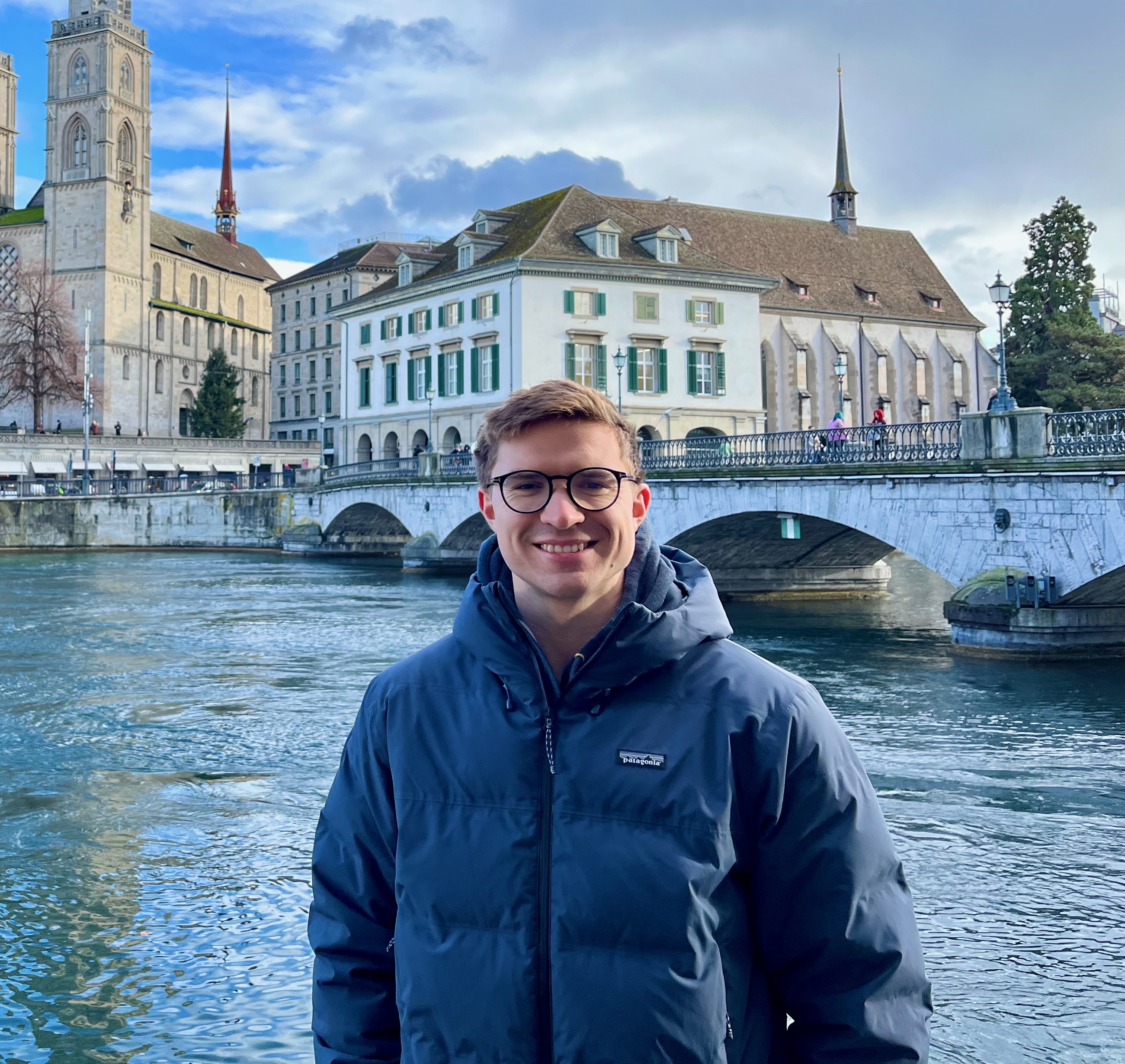
Johann Wenckstern headshot
Johann Wenckstern
EPFL, Switzerland

Reviewer Nomination

Nominate yourself or others to serve as a reviewer.

Open the reviewer nomination form

Contact & Links

Email: realmgen.workshop@gmail.com • X: @realmgen • GitHub: ReALM-GEN